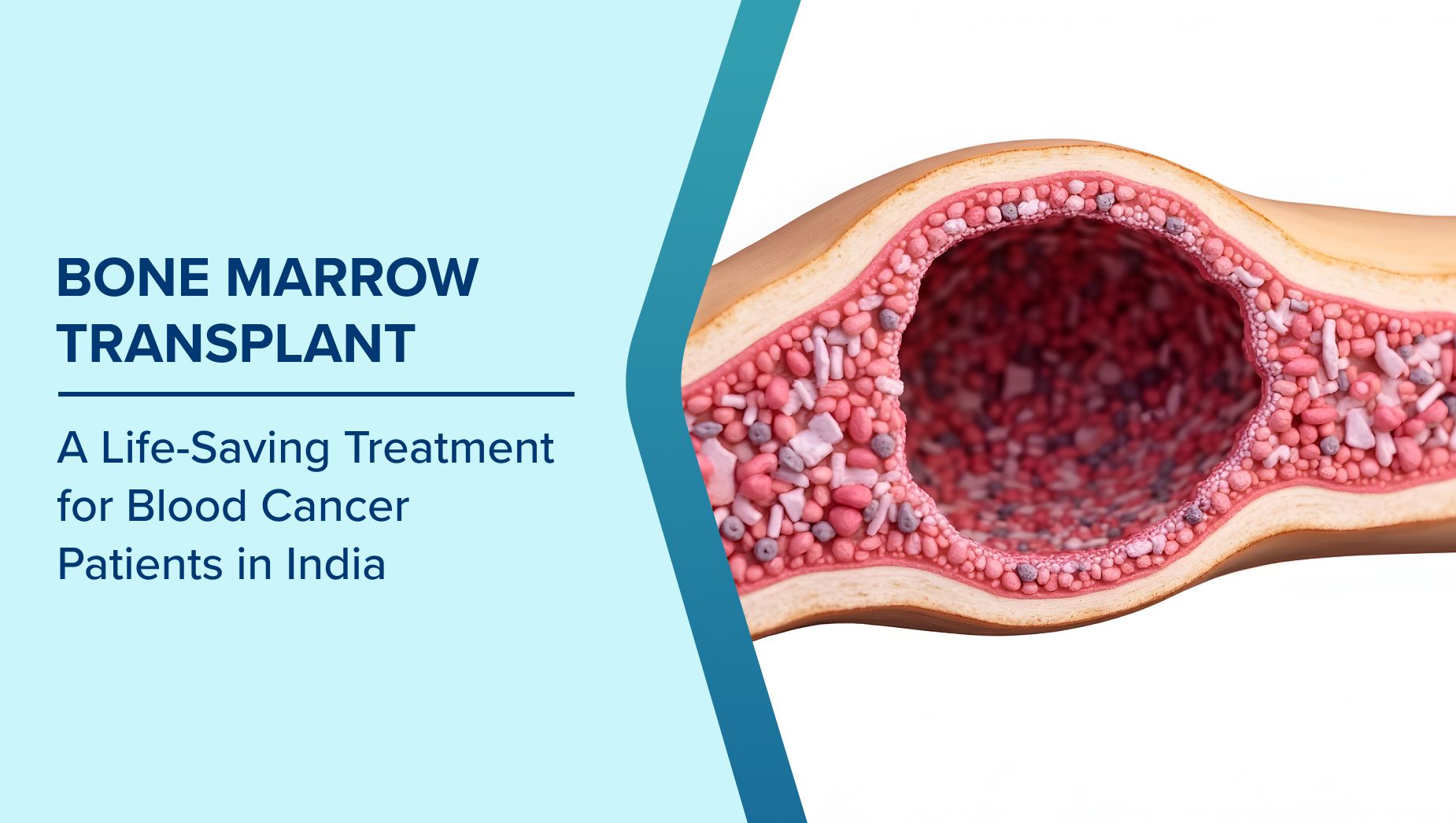
Bone marrow is a soft tissue located inside the bones and filled with tiny blood vessels. It plays a vital part in producing red blood cells to carry oxygen, white blood cells to protect against illness, and platelets to control bleeding. It also contains special cells called haematopoietic stem cells (HSCs) that can develop into different types of blood cells.
When conditions such as blood cancers, genetic disorders, severe infections, or side effects of treatments like chemotherapy damage the bone marrow, the body’s ability to produce healthy blood cells is disrupted, leading to anaemia, frequent infections, or bleeding disorders. In such cases, a bone marrow transplant (BMT) can be a life-saving treatment.